Stories9.10.2026
Maximalist Decor: A Guide to Beyond-Minimalism at Home
Some rooms whisper. We would rather they told a story.
Maximalist decor is the art of decorating with abundance and intention: layered colour, pattern, texture and objects that mean something, composed so the whole room feels rich and coherent. It is the opposite of the neutral, pared-back look, and it is having a moment for a good reason. People want homes that feel alive.
At Klaus Haapaniemi & Co. we have worked beyond minimalism since 2010, so this is familiar ground. Below is how to build a maximalist home that feels considered and built to last.
Key takeaways
- Maximalist decor is curated abundance: every layer earns its place.
- A unifying thread (one colour, motif or mood) is what holds a busy room together.
- Simple guardrails, like the 3-5-7 rule, keep the layering balanced.
- Done with meaning and made well, maximalism outlasts any single trend.
What is maximalist decor?
Maximalist decor is a design approach that embraces more: more colour, more pattern, more texture, and more personal objects, arranged with care so the room reads as abundant and intentional. Where minimalism strips a space back to essentials, maximalism fills it with character. The guiding idea is "more is more, but everything belongs."
That last part matters, because maximalism is often mistaken for mess. A good maximalist room is edited. Colours answer each other, patterns are chosen to sit together, and the objects on display are there because they carry meaning, whether that is an heirloom, a piece of original art, or a cushion whose print you fell for.
Maximalism vs minimalism
The real difference is as much emotional as visual. Minimalism seeks calm through absence. Maximalism seeks warmth and wonder through presence. If a bare, tonal room leaves you a little cold, maximalism is likely your instinct.
We describe our own outlook as beyond minimalism. The desire is to re-wild the interior, to counterbalance the safe neutrality of so much modern design and bring colour, folklore and life back into a home. You can read more about that thinking on our about page.
Why maximalism now
Maximalism has surged as a reaction against a decade of grey, tonal restraint. After years of the same soft neutrals repeating from home to home, people are choosing self-expression instead. A room full of colour and pattern is personal in a way a beige one rarely is.
Part of this is what the internet has christened dopamine decor: the idea that colour, whimsy and joyful objects lift your mood, and that your home should make you feel something. Younger decorators in particular have embraced maximalism as a way to reject sameness and show who they are.
Will it last? The version built on personal meaning, on pieces you love and stories you want to keep, ages far better than any single fashionable colour.
How to do maximalism without the chaos
The fear with maximalist decor is that it will tip into clutter. It will not, as long as you give the room a few guardrails. The point of maximalism is not the absence of rules, it is confident layering within them.
Start with a unifying thread. Choose one element that runs through the whole scheme: a recurring colour, a repeated motif, a shared mood, or a single hero print that everything else answers to. That thread is the reason a busy room feels composed.
A well-known guideline is the 3-5-7 rule. When you group objects, odd numbers read as more natural and balanced than even ones, so arrange in threes, fives or sevens, and vary the height, shape and texture within each grouping. It works on a mantelpiece, a shelf or a coffee table, and it is one of the easiest ways to make a display look deliberate.
A few more guardrails keep the layering deliberate:
- Anchor with a palette. Let two or three colours lead and treat the rest as accents.
- Give the eye somewhere to rest. A plain wall, a stretch of solid fabric or a quiet corner stops a rich room from overwhelming.
- Edit as you go. Maximalism is additive, so finish by removing the one thing too many.
Colour and pattern: how to mix them
Mixing pattern is the heart of maximalist interior design, and it is far more forgiving than it looks. The trick is to vary the scale. Combine a large, sweeping print with a medium geometric and a small, fine texture, and the eye reads them as a family. Patterns of the same size compete; patterns of different sizes converse.
Colour is your other tool. Pull a palette from a single print you love and repeat those colours around the room, in a cushion here, a wallpaper there, a rug underfoot. Because the shades already live together in that one design, everything you draw from it will feel connected.
Let one print be the hero and the rest play a supporting role. A bold fabric or wallpaper can set the tone for a room, and a scatter of cushions can carry that story onto the sofa without shouting over it.
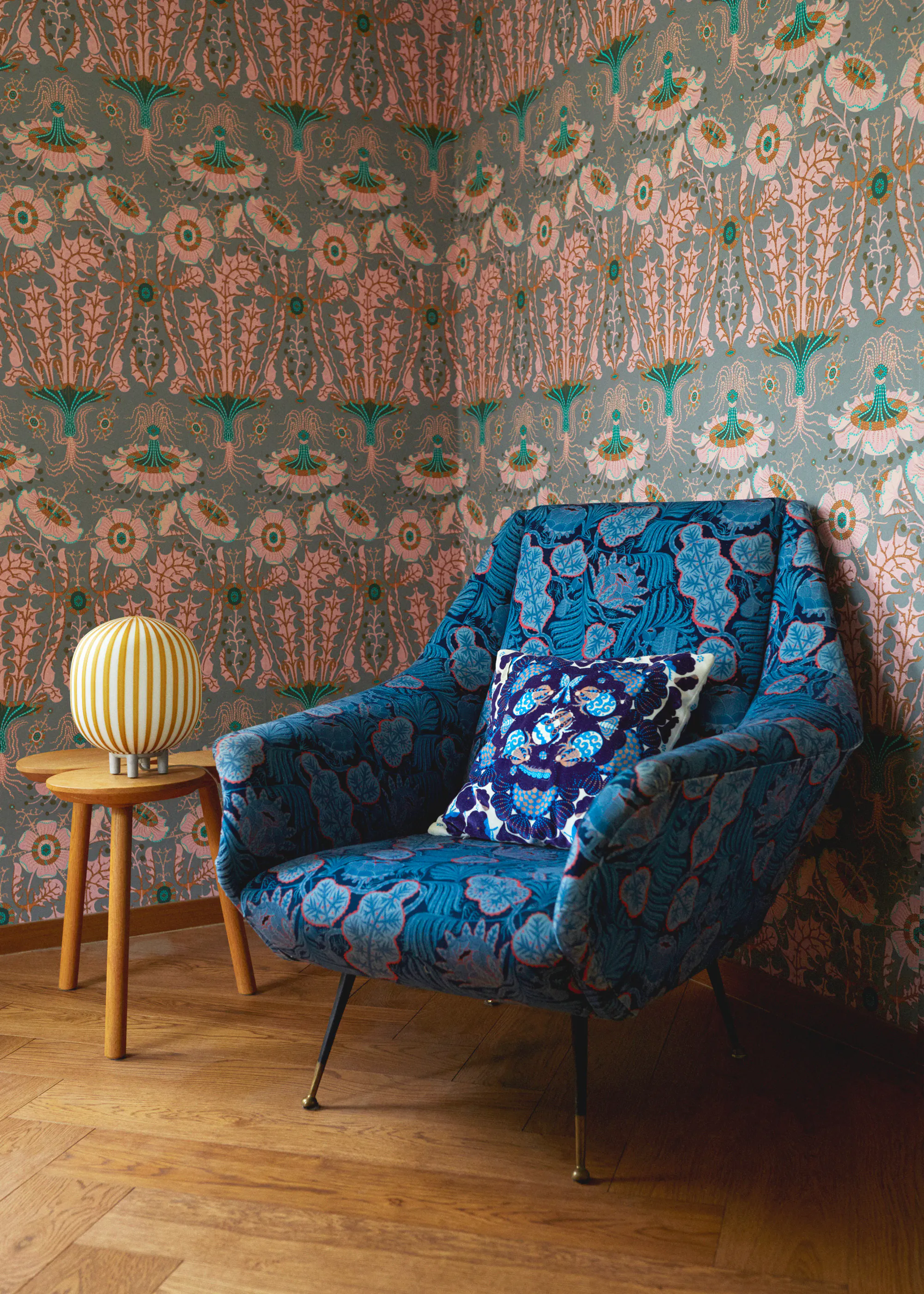
Statement walls and wallpaper
If you want the fastest route into maximalist decor, start with the walls. Wallpaper transforms a room in a single gesture, and a strongly patterned wall becomes the anchor everything else can gather around.
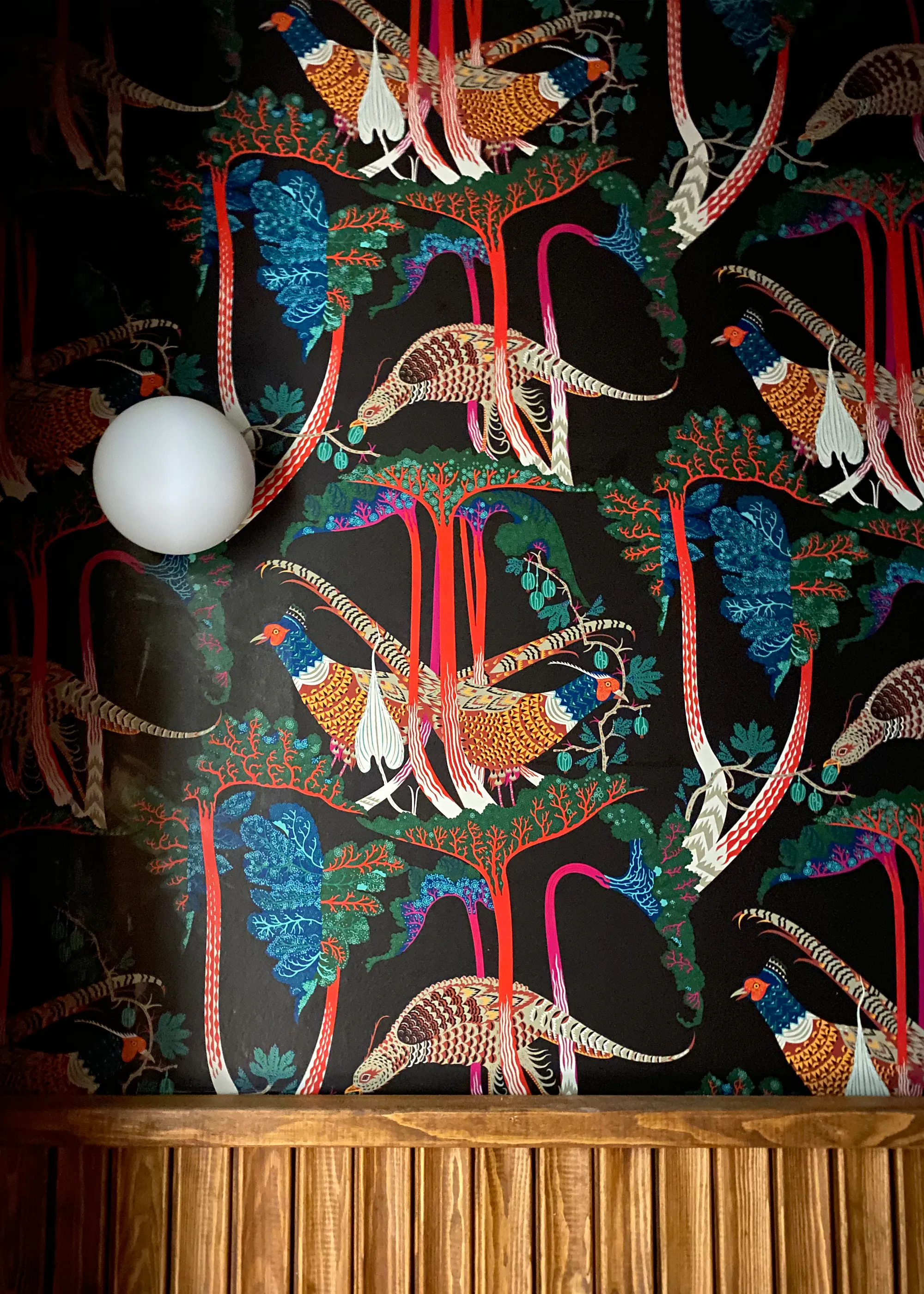
Dark maximalism is a particularly beautiful way in. Deep, moody backgrounds, think dark florals and botanical prints on inky grounds, make colour glow and give a room instant depth and drama. A dark, densely patterned wall feels enveloping and grown-up.
You do not have to paper every wall. A single feature wall behind a bed or a sofa gives you the impact with room to breathe. Our fabric and wallpaper collection is digitally printed to order, so the pattern arrives as rich and saturated as it looked on the wall you imagined.
Layering textiles: cushions, throws and rugs
Textiles are where maximalism becomes tactile. Layering soft furnishings adds warmth, colour and that lived-in richness a maximalist room needs.
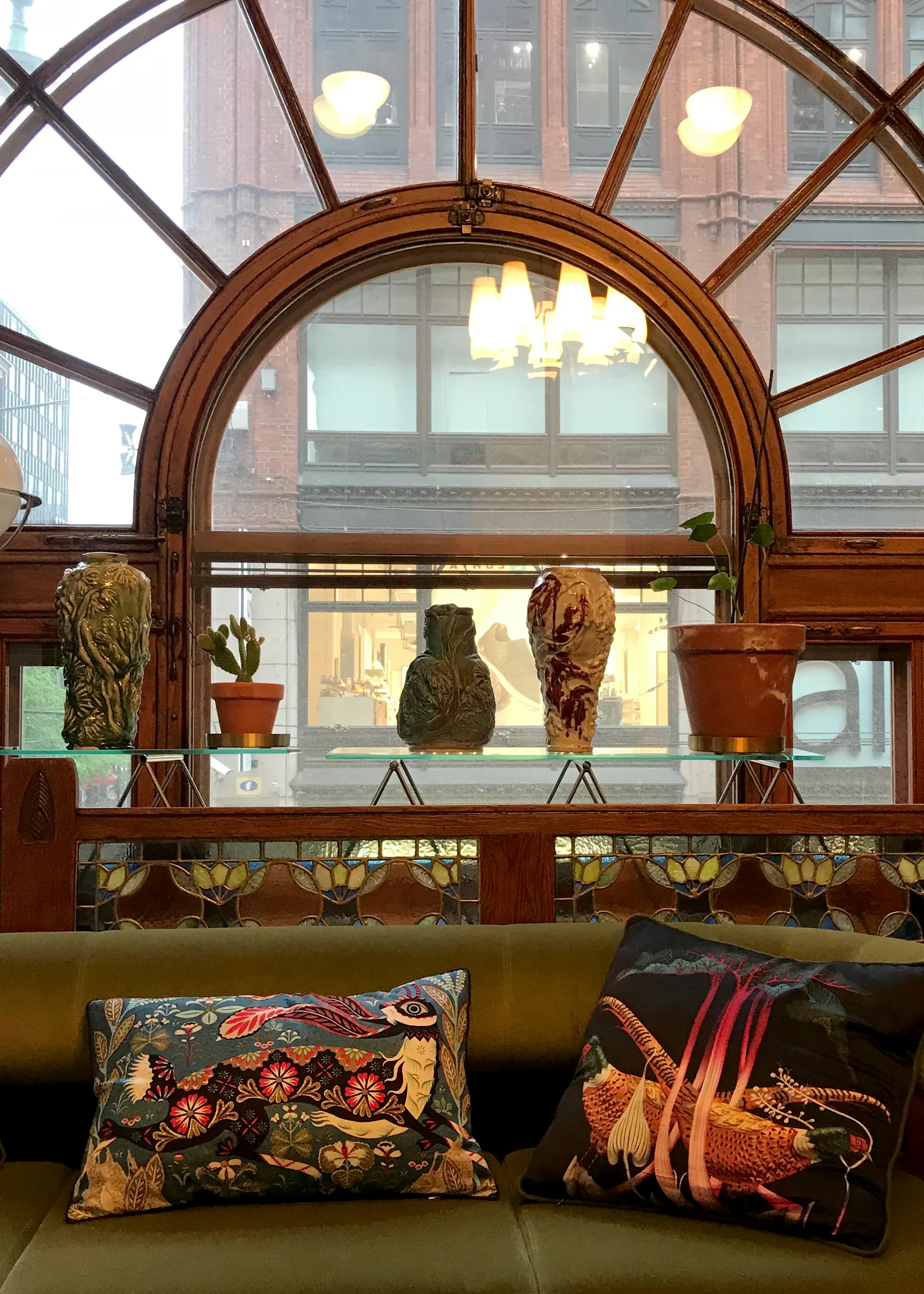
Build cushions in odd numbers and mix the materials as much as the prints: a printed silk against a linen, a velvet against a weave. The contrast in texture is as important as the contrast in colour, and it is what stops a pile of cushions from looking flat.
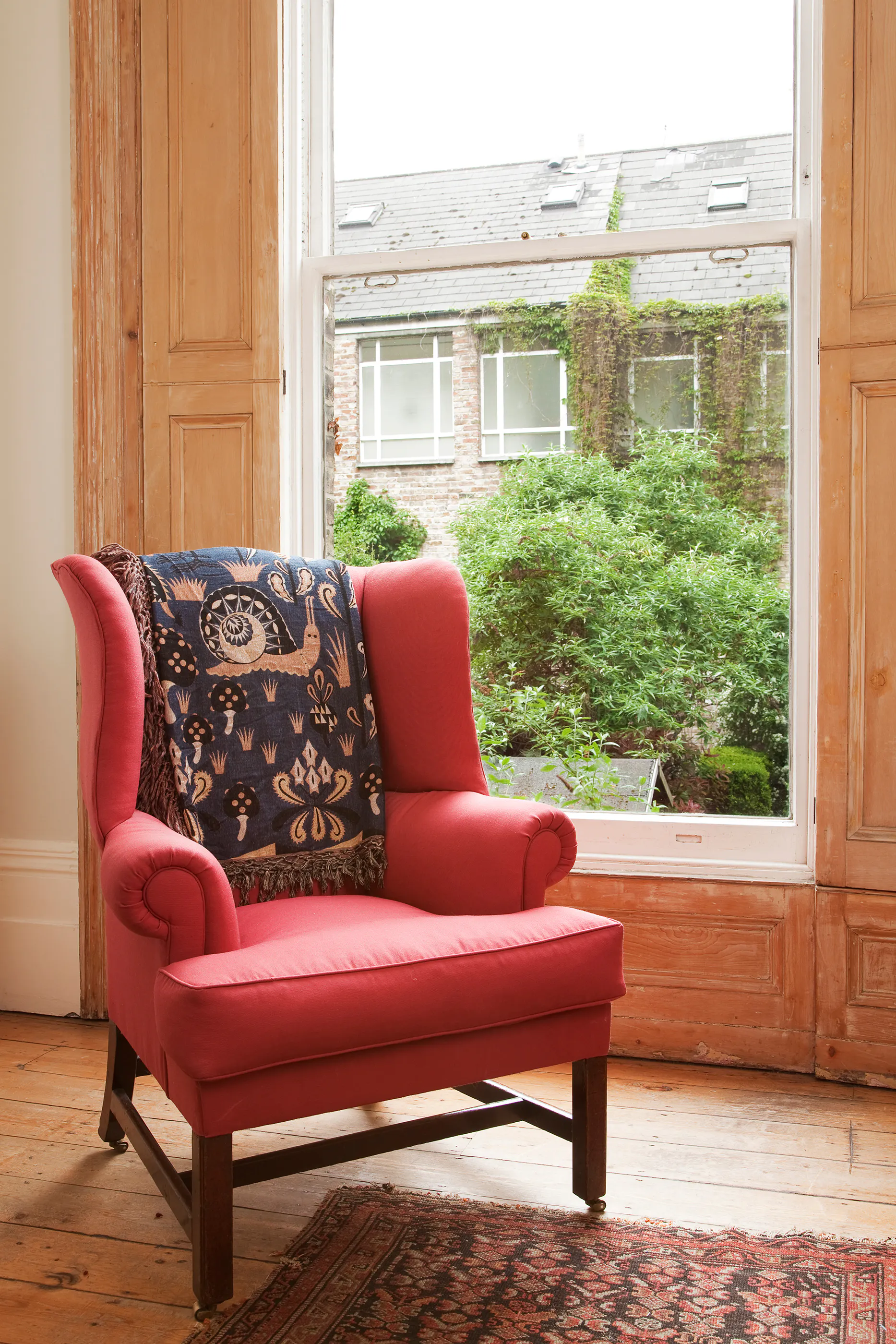
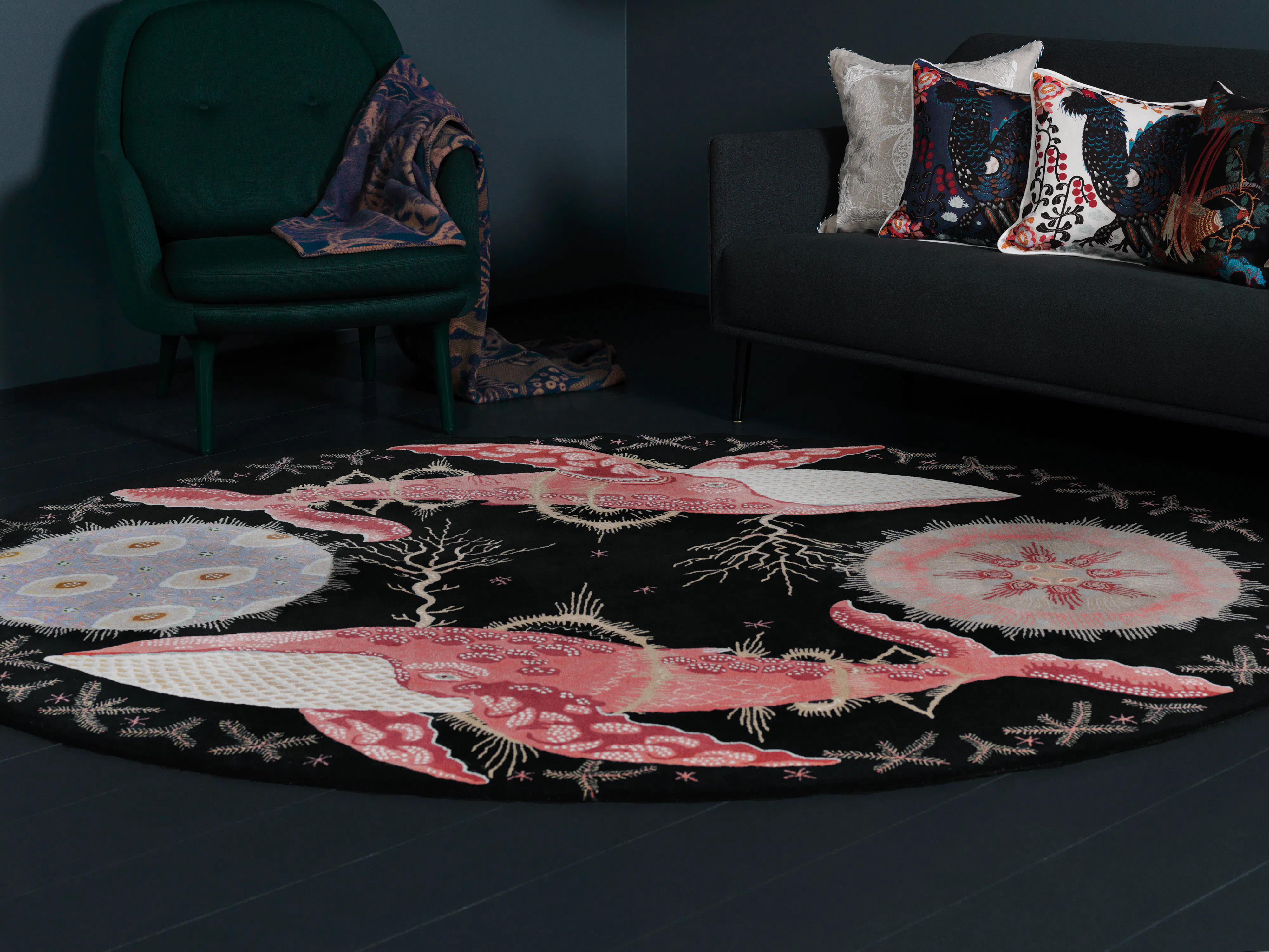
Add a throw with a pattern or a colour that picks up the scheme, and let a patterned rug or carpet do quiet, foundational work underfoot. A characterful rug grounds the whole room and gives all the layers above it a place to stand.
Art, prints and gallery walls
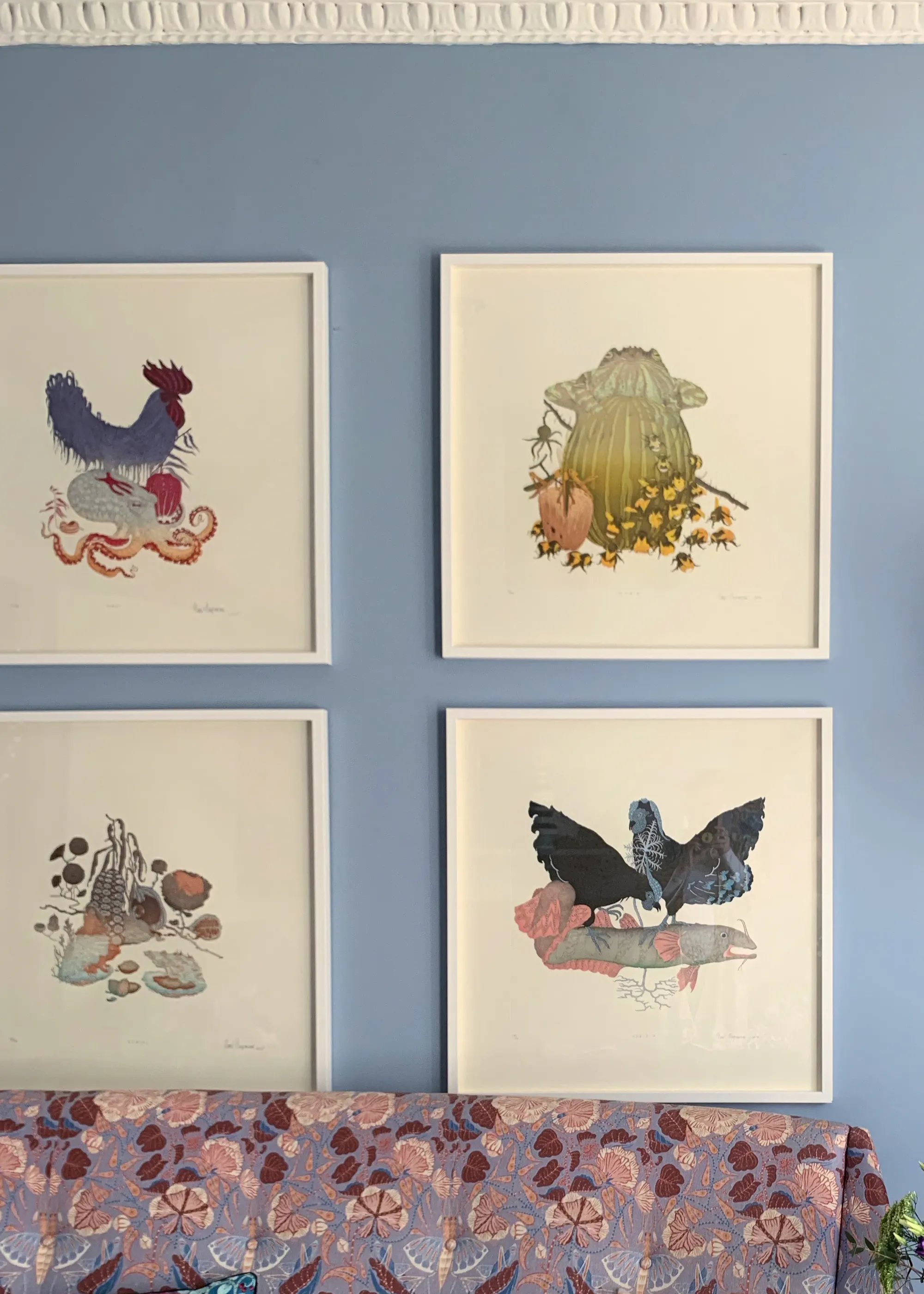
Art is the soul of a maximalist room. It is where personality concentrates, and it is the most personal layer of all. Original art and printed works give a room something to say.
A gallery wall is the classic maximalist move. Mix sizes and subjects, keep a consistent spacing or a shared frame colour to hold it together, and let the arrangement grow over time. A single large piece can work just as hard, becoming the hero the rest of the room answers to.
Look for images with a story in them. Our prints are drawn from folklore and the natural world, full of creatures and detail that reward a second look, which is exactly what you want from art you will live alongside for years.
Maximalism with meaning, and made to last
Here is the part that keeps maximalism from becoming just more stuff. The best maximalist homes are not the fullest, they are the most meaningful. Every layer is something you chose because it moved you.
That is how we design. Our prints are narrative, rooted in Finnish folklore and the mysteries of nature, so a cushion or a wallpaper is not only decoration but a small story on your wall or your sofa. It is also why we make the way we do. Our fabrics and wallpapers are digitally printed on demand, which uses less ink and water and creates very little waste, so you can decorate boldly and responsibly at once.
Buy fewer, better, story-rich pieces and a maximalist room will stay with you for years. Abundance and care belong together.
The same approach works in a wardrobe. Our guide to how to wear a kimono shows how one printed piece can lead an outfit, from the house to the evening.
Where to start, room by room
You do not have to commit the whole house at once. Maximalism is easiest to learn one room at a time.
A maximalist living room is the natural place to begin, because it is where layering has the most to work with. Anchor the scheme with a patterned rug or a papered feature wall, build the sofa up with cushions in mixed prints and textures, then add art, books and objects in odd-numbered groupings. Keep one or two surfaces calm so the eye can rest.
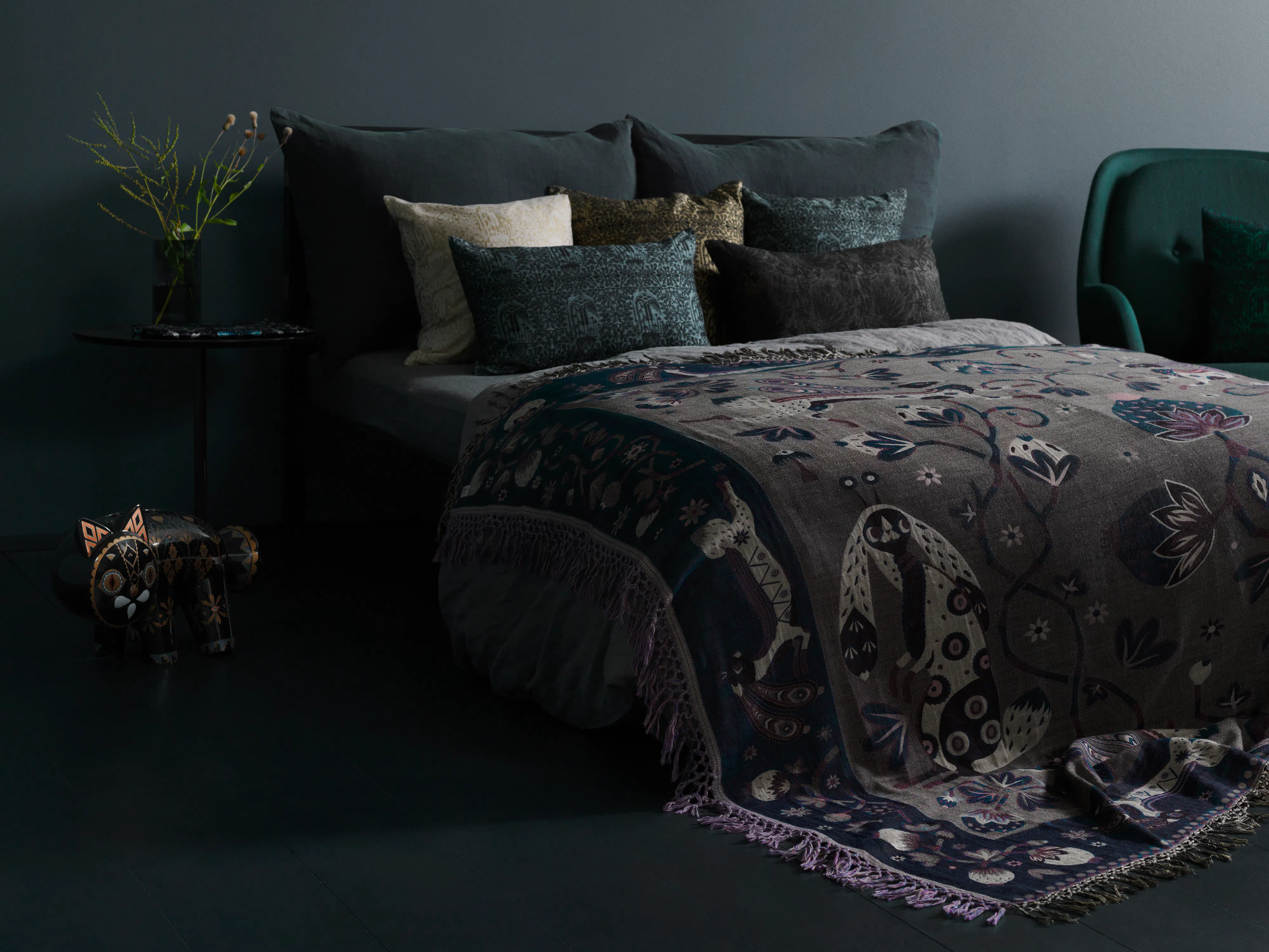
A maximalist bedroom rewards a slightly softer hand. Here the bed is the hero: layer the bedding, a throw and cushions in a shared palette, and let a dark, densely patterned wall behind the headboard do the dramatic work while the rest of the room stays quieter. A bedroom is for retreat, so aim for something enveloping and calm.
Hallways, cloakrooms and other small spaces are the boldest place to experiment. Because you pass through them quickly, a saturated wallpaper or a wall of prints reads as a joyful surprise. Small rooms are where maximalism is most forgiving, and often where it is most fun.
Frequently asked questions
What is maximalist decor?
Maximalist decor is a design approach built on curated abundance: layered colour, pattern, texture and meaningful objects, arranged with intention so a room feels rich and full of character. It sits at the opposite end of the spectrum from minimalism.
What is the 3-5-7 rule in decorating?
The 3-5-7 rule is a simple styling guideline: group objects in odd numbers, such as threes, fives or sevens, because odd-numbered arrangements read as more natural and balanced than even ones. Within each grouping, vary the height, shape and texture so the display looks deliberate.
Why does Gen Z like maximalism?
Maximalism gives younger decorators a way to express individuality and reject a decade of uniform, neutral interiors. It also fits the rise of dopamine decor, the idea that colour, whimsy and joyful objects can lift your mood, which makes a maximalist home feel personal and uplifting.
Is maximalism coming back in 2026?
No one can say for certain where interiors trends will go next. What tends to last is the personal version of maximalism: a home built from pieces you love and chose for their meaning, which dates far more slowly than one built around a single fashionable colour.
Bring your home to life
Maximalism, at its best, is a home that tells a story. Start with one print you love, give the room a thread to follow, layer with intention, and edit until it sings. When you are ready to begin, explore our Home Collections of cushions, wallpaper, prints and more.
Klaus Haapaniemi & Co. is a Finnish design house that designs, prints and produces its own homeware and clothing, founded in 2010 by designer Mia Wallenius and artist Klaus Haapaniemi.