Stories23.10.2026
Velvet Cushions: How to Style, Clean and Care for Them
Velvet catches the light like few other fabrics. Run a hand across it and the colour shifts, deepens, glows.
Printed velvet goes further, turning a cushion into a small painting you can lean against. Knowing how to clean velvet is what keeps that glow for years: vacuum it gently with a soft brush attachment, blot spills straight away, brush the pile back into place, and follow the care label for anything more than a light refresh.
Below is how we choose, arrange and look after our own velvet cushions.
Key takeaways
- Velvet adds depth of colour and a soft sheen that flat fabrics cannot match.
- Mix shapes as well as prints: a square, a long cushion and a bolster work together.
- Clean velvet gently and often: vacuum, blot and brush with the direction of the pile.
- Check the care label before using water, a washing machine or a steamer.
Why velvet works so well on cushions
Velvet has a short, dense pile that reflects light differently depending on the angle you see it from. That is why the same colour can look rich and dark from one side of the room and bright from the other. On a cushion, a small area, the effect is concentrated: one velvet cushion can lift a plain sofa on its own.
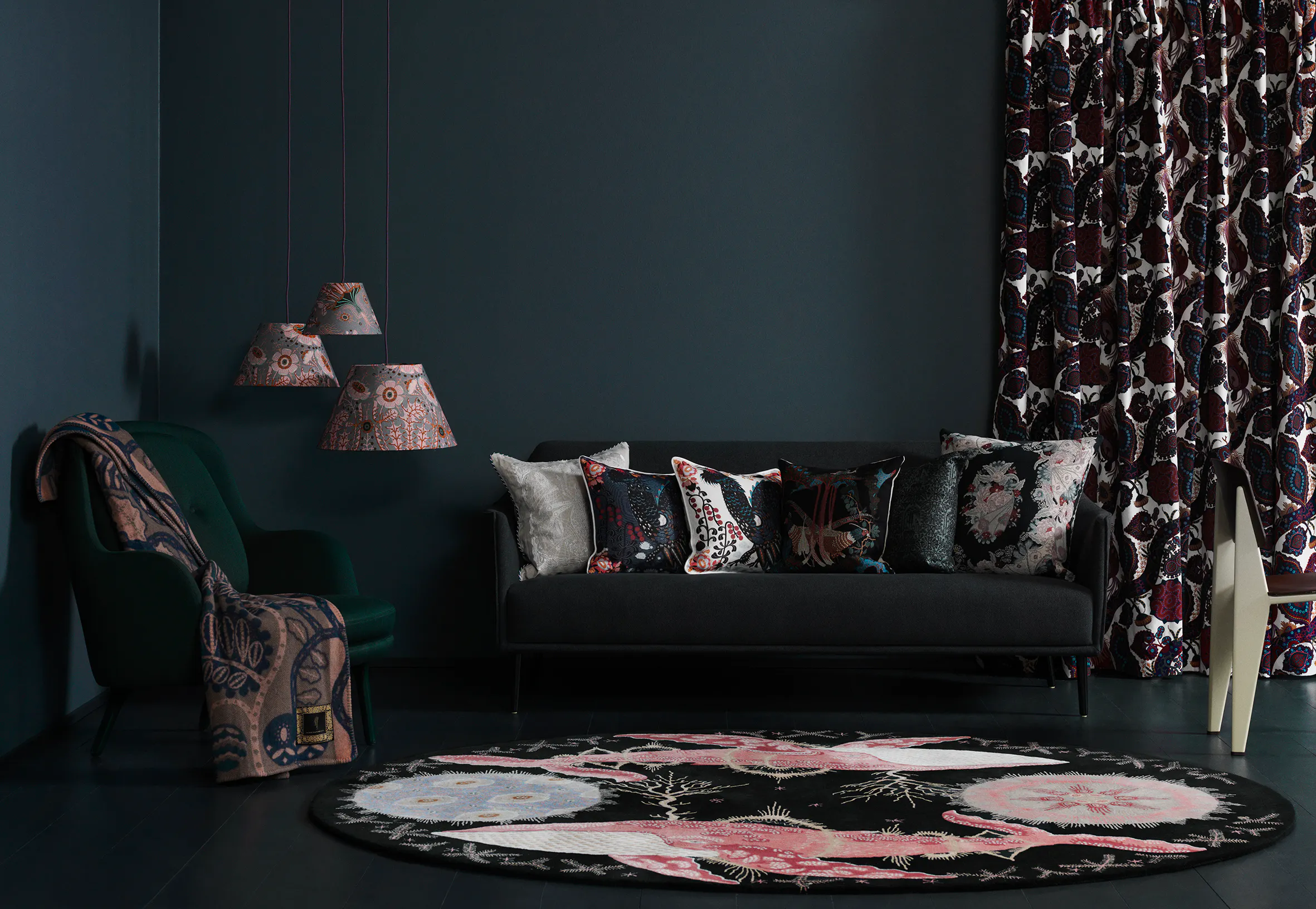
Printed velvet adds pattern to that depth. Many of our velvet cushions are printed on cotton velvet, and the pile gives the colours a softness that printed cotton or linen does not have. Some, like the Bumble Bees and Long Poppy cushions, carry the print on both sides, so there is no wrong way to turn them.
How to choose velvet cushions
Start with colour. Velvet makes colour look more saturated, so a jewel tone such as emerald, deep blue or plum reads as luxurious, and a dark ground lets a printed motif stand out. Our Iceflower Emerald velvet cushion is a good example: one print, one colour family, and the velvet does the rest.
Then think about shape:
- Square cushions are the base of any arrangement and the easiest to mix.
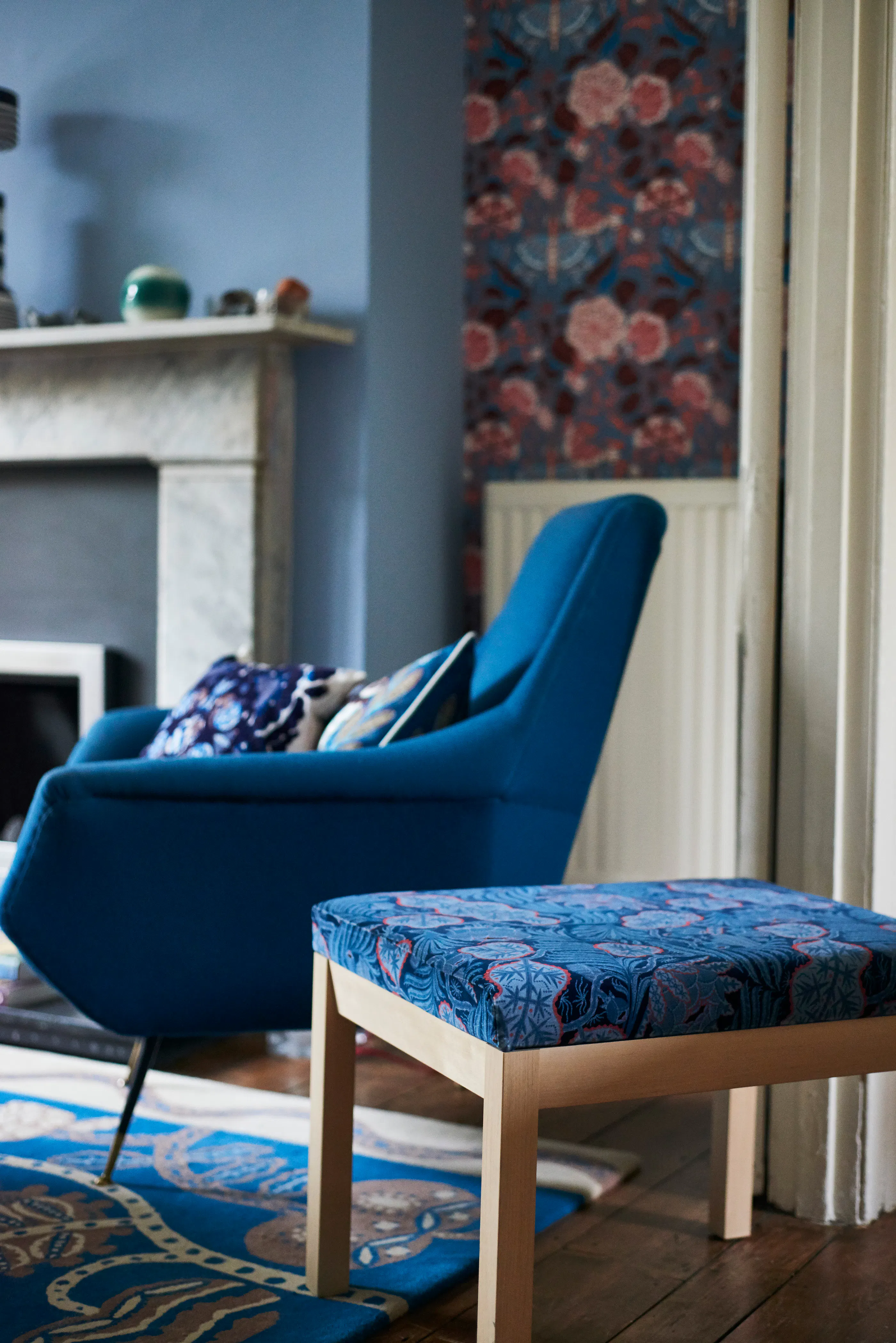
- Long, narrow cushions, such as the Long Iceflower Blue velvet cushion, sit in front of squares on a sofa or across the pillows on a bed.
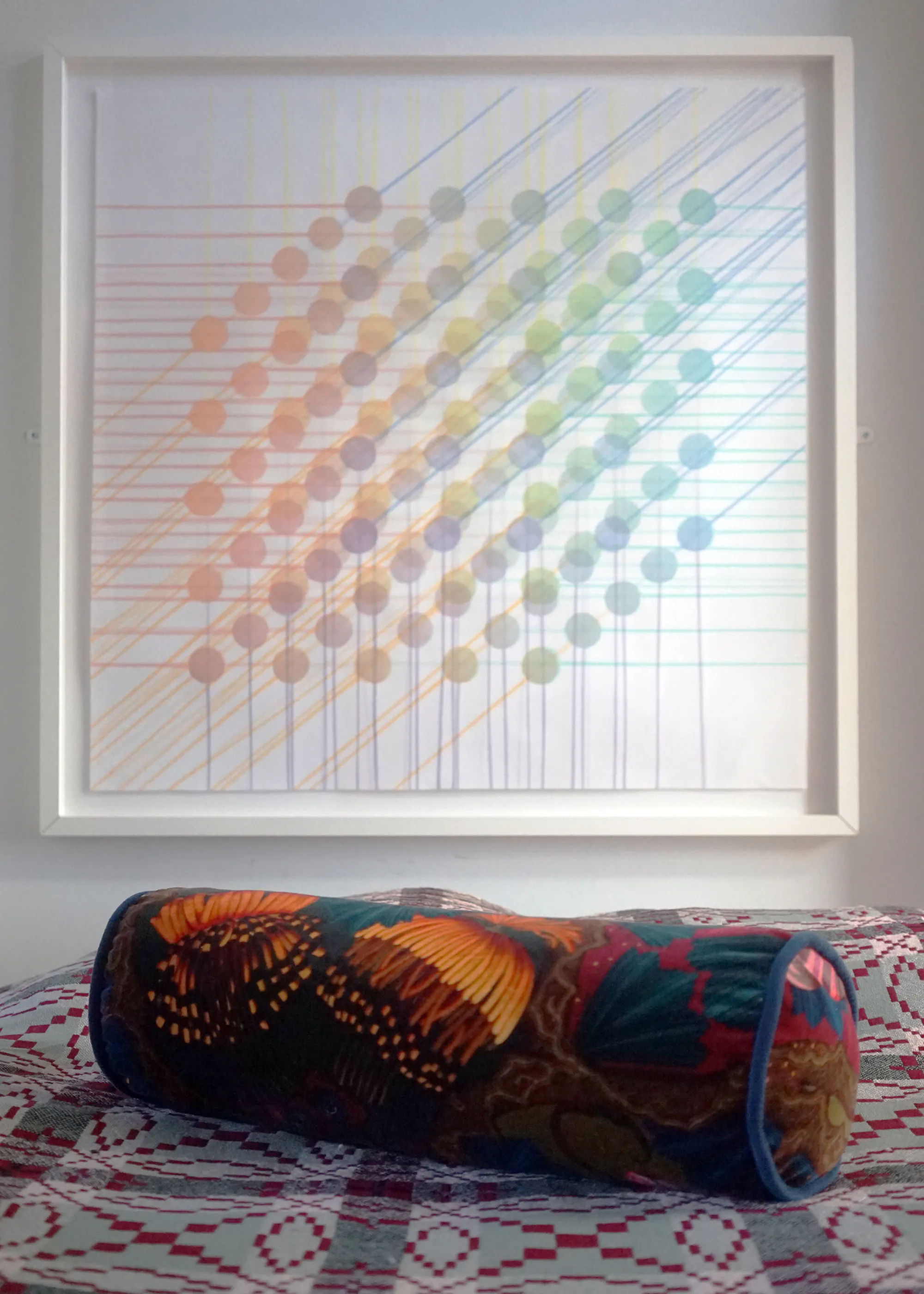
- Bolsters give a firm, rounded line at the arm of a sofa or the foot of a bed. Our Artemisia Absinthium velvet bolster is finished with thick velvet piping.
Finally, look at the finish. Piping in a contrasting velvet frames the print and keeps the edge crisp. Some cushions are sold as covers, so check whether an inner pad is included before you order.
How to arrange cushions on a sofa
A good arrangement looks relaxed but follows a few simple rules:
- Use odd numbers. Three or five cushions read as more natural than two or four.
- Place the largest at the back. Square cushions sit against the sofa back or arms, with smaller and longer shapes in front.
- Mix shapes and sizes. A square, a long cushion and a bolster give the arrangement depth.
- Repeat one colour. Pick one shade from your boldest print and let it appear in at least two cushions, so the group feels connected.
- Vary the texture. Put velvet beside linen, silk or a woven fabric so each surface looks richer.
On a bed, the same logic applies: sleeping pillows at the back, square cushions in front, then a long cushion or bolster across the middle. You can find more ideas for combining pattern and colour in our guide to maximalist decor.
Styling velvet with other textures
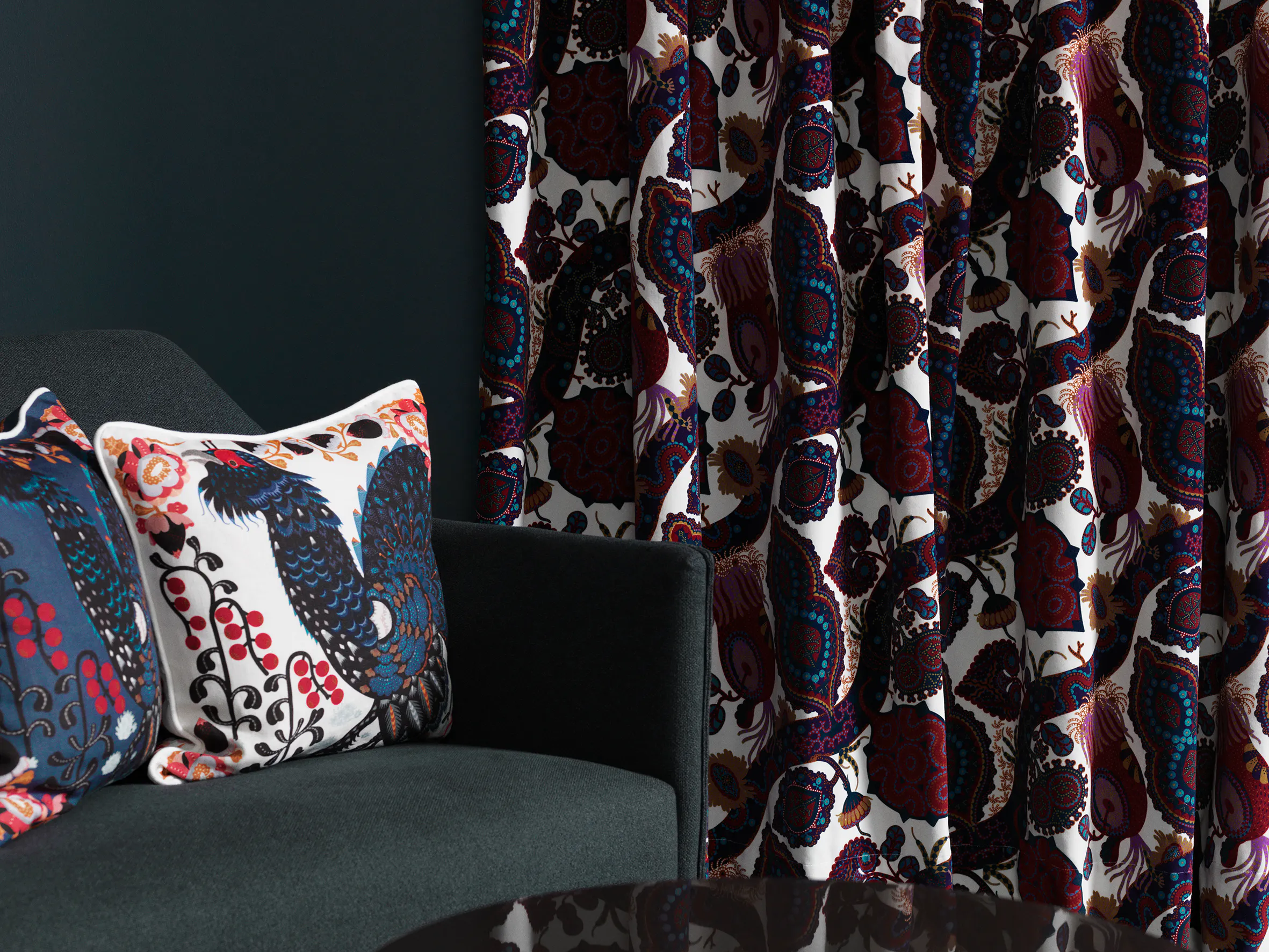
Velvet looks its best against contrast. Next to a matte linen cushion its sheen becomes more obvious, and beside a printed silk cushion it adds weight to an otherwise light arrangement. A wool or patterned throw folded over the arm of the sofa completes the layering and brings warmth in the colder months.
Dark velvet suits rooms with low, warm light, where it glows in the evening. Lighter velvet, such as the Psychotria Elata White cushion with its cognac piping, softens a bright room without disappearing into it.

How to clean velvet cushions
Velvet is not difficult to look after, but it rewards a gentle hand. Here is how to clean velvet cushions safely:
- Read the care label first. Velvet can be cotton, silk, viscose or a blend, and each behaves differently. The label is the only reliable guide to washing or dry cleaning.
- Vacuum regularly. Use a soft brush attachment on a low setting, working in the direction of the pile, to lift dust before it settles in.
- Blot spills straight away. Press a clean, dry cloth onto the spill to absorb it. Do not rub, which pushes liquid into the pile and can leave a mark.
- Spot clean with care. If a mark remains, use a barely damp cloth with a little mild detergent, test it on a hidden area first, and blot rather than scrub.
- Brush the pile back into place. Once dry, a soft clothes brush restores the direction of the pile and evens out the sheen.
- Refresh with steam. Hold a steamer a few centimetres away to lift crushed areas, without pressing the head onto the fabric.
- Dry flat, away from direct heat. Never iron velvet directly or dry it on a radiator, as heat can flatten the pile for good.
For a deep clean, or for any cushion whose label says dry clean only, take it to a professional cleaner.

Everyday care
A few habits keep velvet looking new. Plump and turn cushions every few days so the pile wears evenly. Keep them out of strong direct sunlight, which can fade printed colour over time. If you have pets, a soft brush or a lint roller lifts hair from the pile easily. And when you store cushions away, keep them somewhere dry and avoid folding them tightly, which can leave lines in the pile.
Frequently asked questions
Can velvet be steam cleaned?
Yes, light steaming is one of the best ways to refresh velvet. Hold the steamer a few centimetres from the fabric to lift crushed or flattened pile, then brush it gently once dry. Avoid pressing the steamer head onto the velvet, and check the care label first.
What are the downsides of velvet?
Velvet shows marks and crushing more readily than flat fabrics, attracts dust and pet hair, and can fade in strong sunlight. Regular vacuuming, brushing and turning your cushions keeps these to a minimum, and the depth of colour velvet gives in return is the reason it remains so popular.
Can you wash velvet cushion covers in the washing machine?
It depends on the fibre and the finish, so follow the care label. Some velvets can be washed on a gentle cycle, while others, including many cotton velvets, may shrink or lose their pile in a machine and are better dry cleaned.
How do you arrange cushions on a sofa?
Use an odd number of cushions, place the largest squares at the back, and add smaller or longer shapes in front. Repeat one colour across at least two cushions and mix textures, such as velvet with linen, so the arrangement feels considered.
Find your velvet cushion
Choose a print you love, mix it with a different shape and texture, and give it a gentle brush now and then. Explore our velvet and printed cushions, each one drawn from a story.
Klaus Haapaniemi & Co. is a Finnish design house that designs, prints and produces its own homeware and clothing, founded in 2010 by designer Mia Wallenius and artist Klaus Haapaniemi.