Stories13.11.2026
Dopamine Decor: How to Decorate with Colour and Print
Dopamine decor is the name the internet has given to decorating with the colours, prints and objects that make you happy.
It is personal by design: a sunflower-yellow cushion, a wall of pale blue, a pink glazed tile, each chosen because it makes you glad to come home. The way to do it is to start with one thing you love and let its colours spread through the room.
Below is how we would go about it with printed cushions, wallpaper, throws and ceramics, room by room.
Key takeaways
- Dopamine decor is a trend name for decorating with colours and things that make you happy.
- Start with one print you love and take your palette from it.
- Cushions and a throw are the easiest way in; wallpaper is the boldest.
- Repeat each colour at least twice so a bright room feels composed.
What is dopamine decor?
The phrase grew out of dopamine dressing, the habit of wearing clothes that make you feel good, and moved from wardrobes to living rooms on social media. It borrows its name from a chemical in the brain, but it is a decorating style. We use the name the way the trend does, as a label for joyful, colourful rooms, and we make no claims about what a cushion does to anyone's brain chemistry.
What the style asks is easy to describe and personal to answer: which colours do you love, and which objects make you smile when you see them? Many people describe colour as mood-lifting, and that is the spirit of it. A dopamine decor room might be bright and sunny or deep and jewel-toned, and what these rooms share is that every colour in them was chosen with feeling.

Dopamine decor vs maximalism
The two often appear side by side, and they overlap. Maximalism is about abundance: layered pattern, collected objects and more of everything, composed with care. Dopamine decor is about joy, and colour is its main tool. A dopamine room can be quite spare, with one sunny wall and a few bright pieces, while a maximalist room can be dark, moody and full.
Many homes are both. If layering pattern on pattern is what draws you, our guide to maximalist decor is the companion to this one. Here, we stay with colour.
How to find your colours
Every dopamine decor scheme starts with a question only you can answer. These steps turn the answer into a palette:
- Start with one thing you love. A print, a painting, a vase or a scarf. Look at it closely and name the colours you see.
- Choose two or three lead colours. Take them from that one object, so they already belong together.
- Decide on the ground. A white or pale background makes colour feel fresh and sunny. A dark ground makes it glow like enamel.
- Repeat each colour at least twice. A yellow cushion on its own can look like an accident, while yellow in a cushion, a vase and a print looks intended.
- Add one surprise. A shade from outside the palette, in a small dose, keeps the room from looking matched.
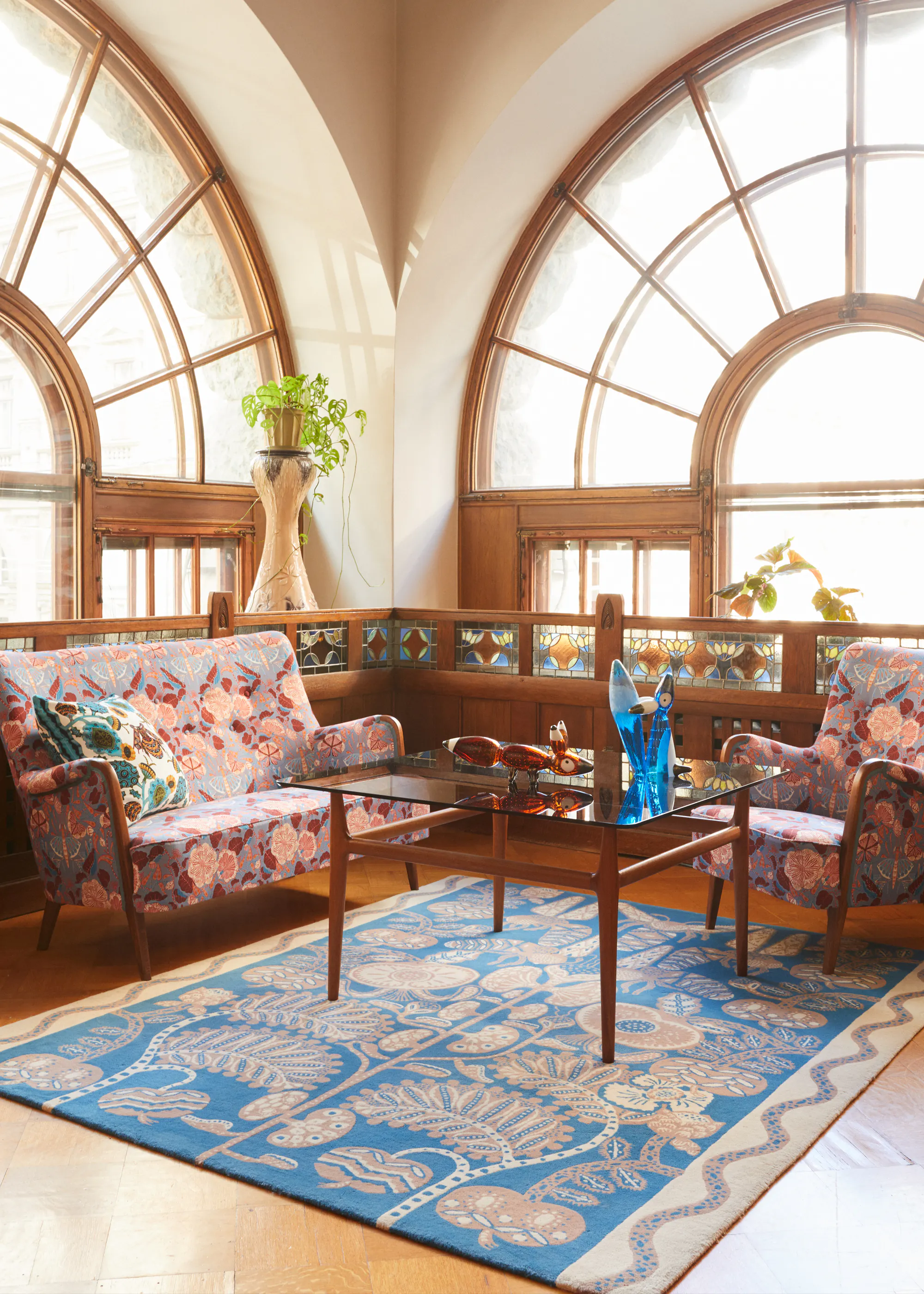
Printed designs make the second step easy. In a single print, the artist has already balanced a dozen colours, and every shade you borrow from it will sit happily beside the others.
Printed cushions: the easiest way in
Cushions are the quickest way to try dopamine decor. They are small, they move from room to room, and you can change them with the seasons. Two or three bright cushions on a plain sofa will shift the mood of a whole room.
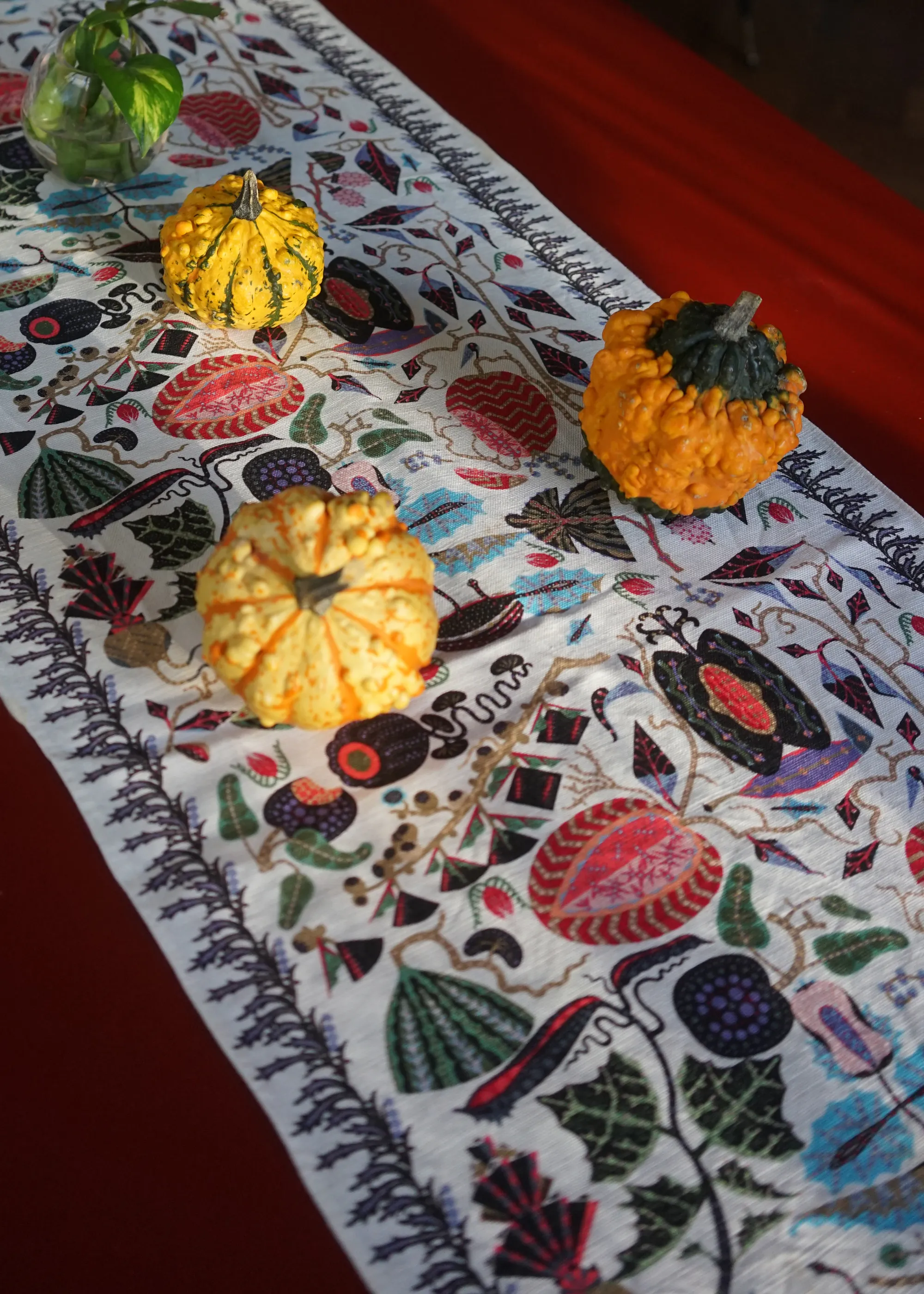
Our Purple Rain Bright velvet cushion has a white ground crowded with botanical forms in blue, green, orange and sunny yellow, framed by black piping. The Flower Bee velvet cushion is sunnier still: turquoise and ochre sunflowers circle a bee at its centre, again on white.
For a darker version of the same joy, the Cosmic Whale cushion with Lilac Planet sets a coral-red whale and a lilac planet on a near-black printed silk, with a red linen reverse and piping. Put it beside a white-ground cushion and you can see how far one warm red can travel between two very different prints.
Velvet deepens colour, which makes it a natural fabric for this style. Our guide to velvet cushions covers how to arrange them on a sofa and how to look after them.
Wallpaper and colour drenching
Wallpaper is the boldest step, and the one that changes a room most. A patterned wall gives you colour and pattern at once, and every object in front of it becomes part of the picture.
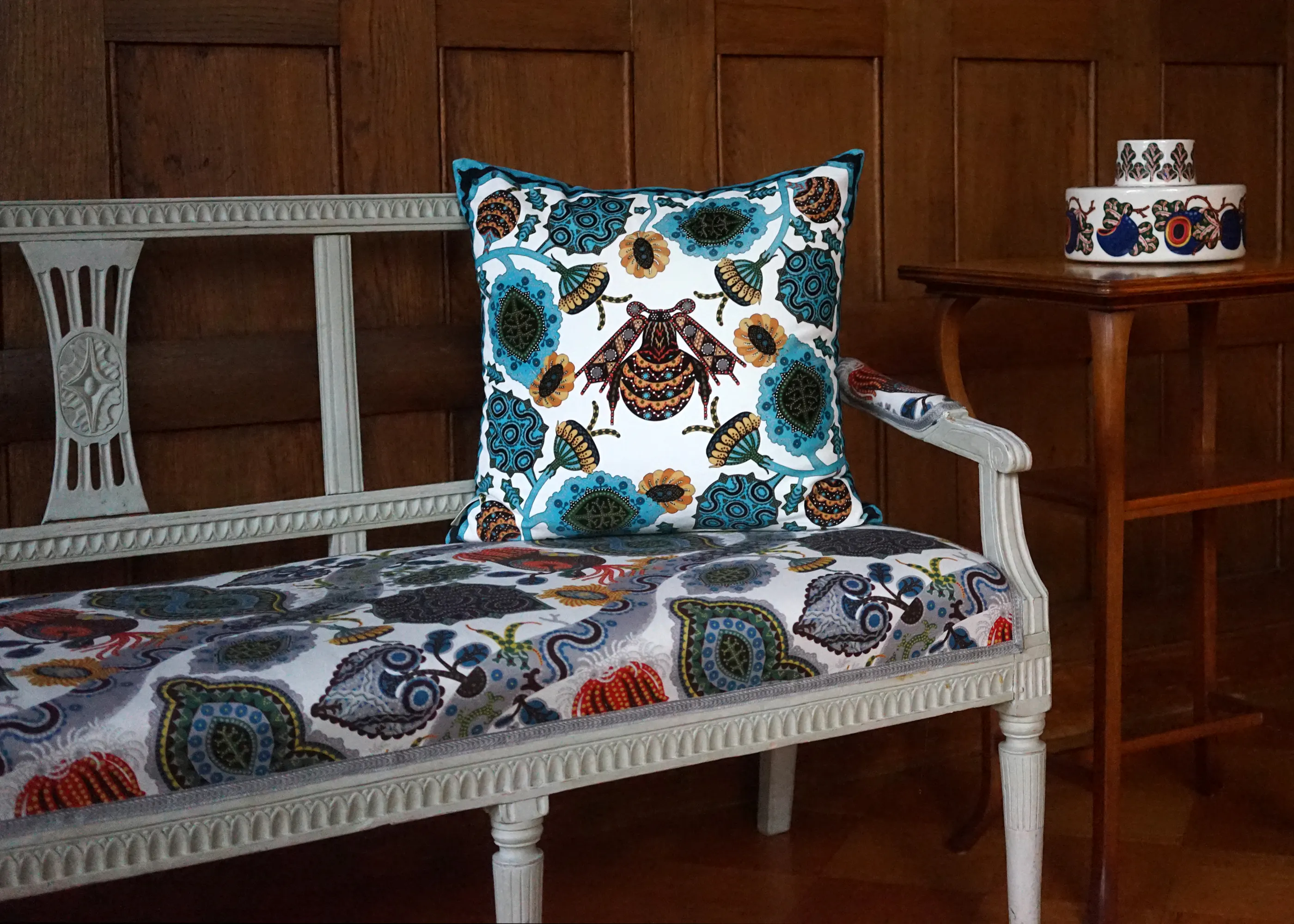
Wallpaper Summer Ceremony is a geometric design in airy pastels and brights. Pale blue and sand-coloured panels are set with red and white flowers and small blue starbursts, so it suits a room that should feel light and festive, such as a dining corner or a hallway. Grasshopper wallpaper goes the other way, with coral-pink flowers and deep red leaves on a periwinkle-blue ground and pale grasshoppers hidden among them.
Colour drenching is the paint-led cousin of this idea. Walls, woodwork and sometimes the ceiling are painted in a single colour, so the whole room is wrapped in it. A patterned wallpaper can do similar work: choose one shade from the paper, use it on the skirting or a door frame, and the room reads as one immersive colour story.
If a whole room feels like too much, paper a single wall behind a bed or a sofa, or line the back of a bookcase.
Throws and textiles
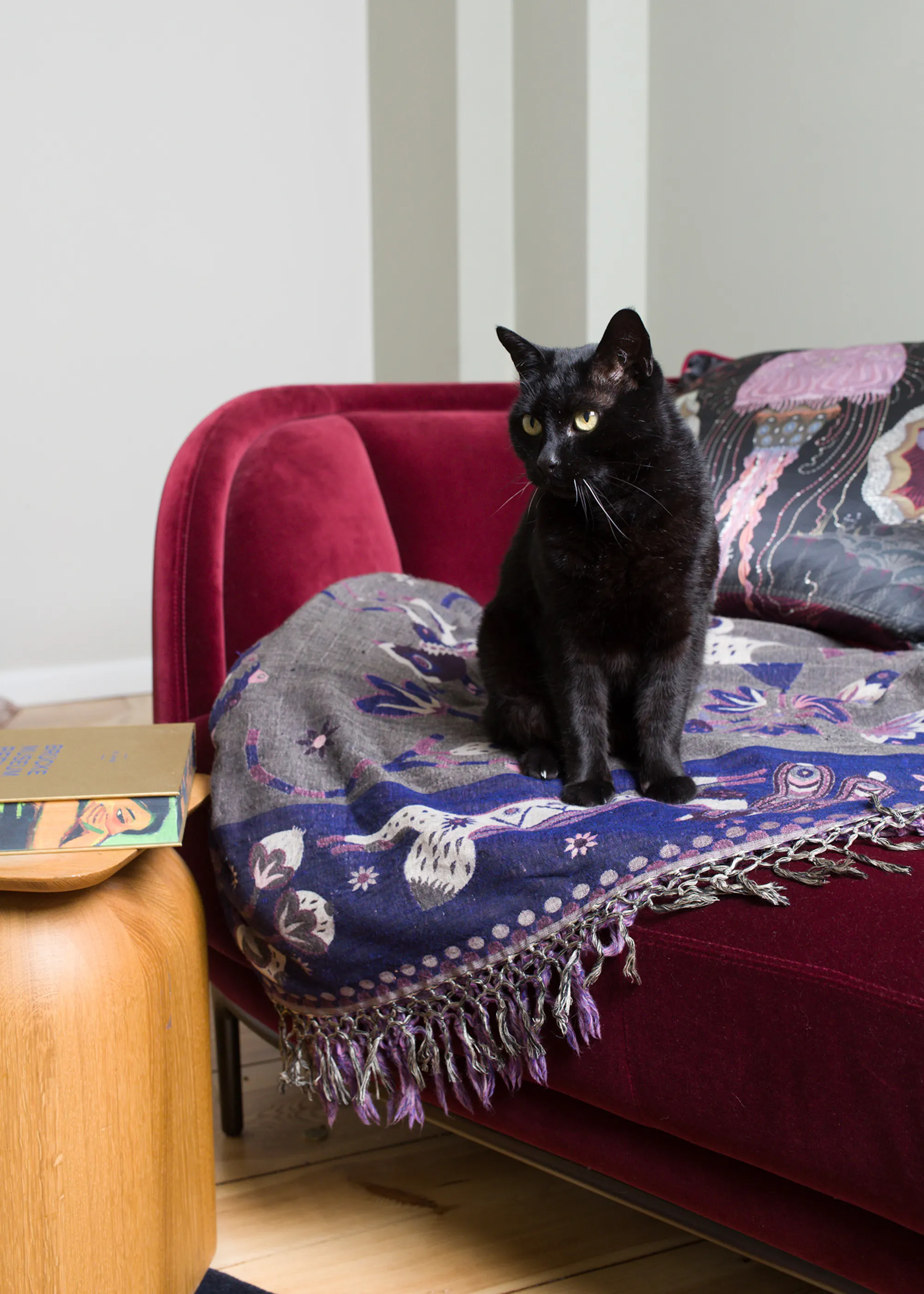
A throw brings colour in a larger dose than a cushion, and it can move from the sofa to the bed as the season changes. Our Rabbit Throw in Blueberry is woven from fine wool and silk, with hand-knotted fringes on all sides. A deep blueberry border frames a softer taupe centre of rabbits and flowers, and the fringe carries a hint of lilac. It measures 200 x 180 cm, and there is also a king-size version at 215 x 245 cm.
Folded over the arm of a sofa, a throw like this gives a bright scheme a deeper note to rest on. Textiles are also a good way to test a colour before you commit to a wall. Live with a bright throw for a month, and you will know if you want that shade on a larger scale.
Ceramics and small objects
Small objects are where dopamine decor becomes playful. A shelf of coloured glass, a bright vase or a stack of patterned plates adds the details that make a room feel collected over time.
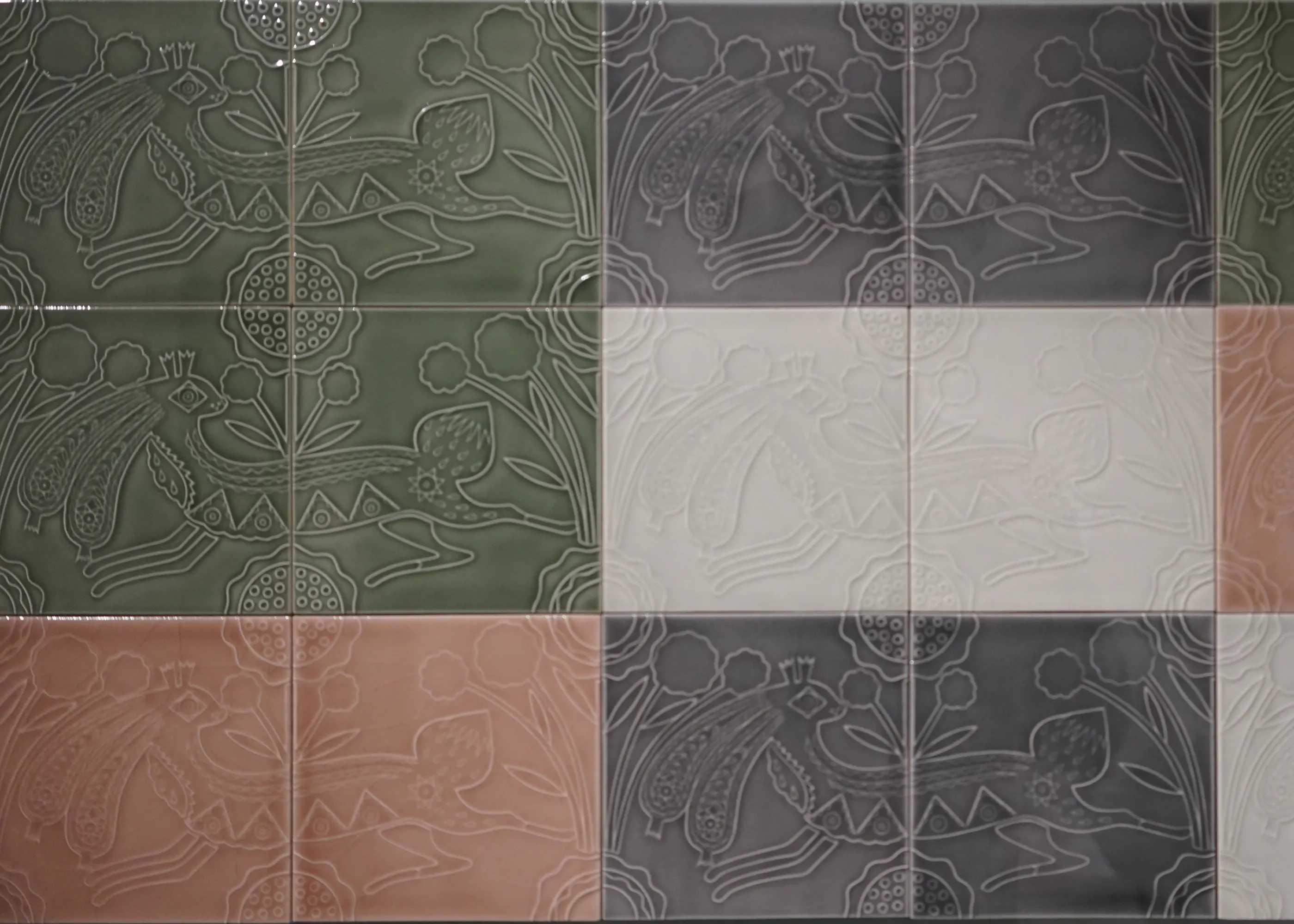
Ceramic tiles are a less obvious choice. Our Hand glazed Rabbit tiles come in pairs, each pair in a single colour, and the rabbit pattern is outlined by hand on a press mould, which creates depth, highlight and shadow in the glaze. The pink pair has a soft blush glaze that would warm a kitchen splashback or the wall behind a basin. They are made by Golem Baukeramik in Germany, and you can find them among our ceramics and decorative pieces.
Dopamine decor room by room
Living room. Build around the sofa. Start with two or three printed cushions in your lead colours, add a throw, and repeat one shade in a lamp, a vase or a print on the wall. A living room is shared, so a joyful palette with one calm colour to rest the eye tends to suit more people.
Bedroom. For dopamine decor in a bedroom, choose colours that feel good in the morning and soft at night. A patterned wall behind the bed, bright cushions against plain bedding and a throw at the foot of the bed give you colour without crowding the room. If you want the room calmer, choose a print on a dark or pastel ground.
Kitchen and dining. Colour works hard in rooms you pass through quickly. Glazed tiles, a printed tablecloth and coloured glass bring brightness without taking up space.
Hallway. A small space is the easiest place to be brave. A bold wallpaper in a hallway greets you each time you come home.
Frequently asked questions
Does dopamine decor work?
It depends on what you want it to do. Dopamine decor is a trend name, and we make no claims about brain chemistry. What it can give you is a home filled with colours and objects you chose because you love them. Many people describe colour as mood-lifting, and a room that reflects your own taste is a pleasure to come home to.
Is dopamine decor still in?
Trend names come and go, and this one may give way to another. The idea behind it is much older than the name: people have filled their homes with colours and objects they love for generations. Pieces chosen for that reason tend to outlast the trend that introduced them.
What colour boosts dopamine?
We cannot name one, and dopamine decor does not depend on one. The colours people associate with the style are often warm and saturated, such as sunflower yellow, coral, pink and turquoise, but deep greens and blues belong here too. The right colour is the one you are glad to see each morning.
How do you find dopamine decor?
Start with what you already love, then look for pieces that share its colours. Prints are a good place to look, because one design can hold a whole palette. Look for makers who design their own patterns, so the colours were chosen to work together, and buy one piece at a time so the room grows with you.
Bring colour home
Dopamine decor asks one question of every object: does it make you happy? Start with a print you love, repeat its colours around the room, and let the rest follow. Explore our home collections of printed cushions, wallpaper, throws and ceramics, each one drawn from a story.
Klaus Haapaniemi & Co. is a Finnish design house that designs, prints and produces its own homeware and clothing, founded in 2010 by designer Mia Wallenius and artist Klaus Haapaniemi.